IN
How BIM Modeling Is Transforming Modern Construction Workflows
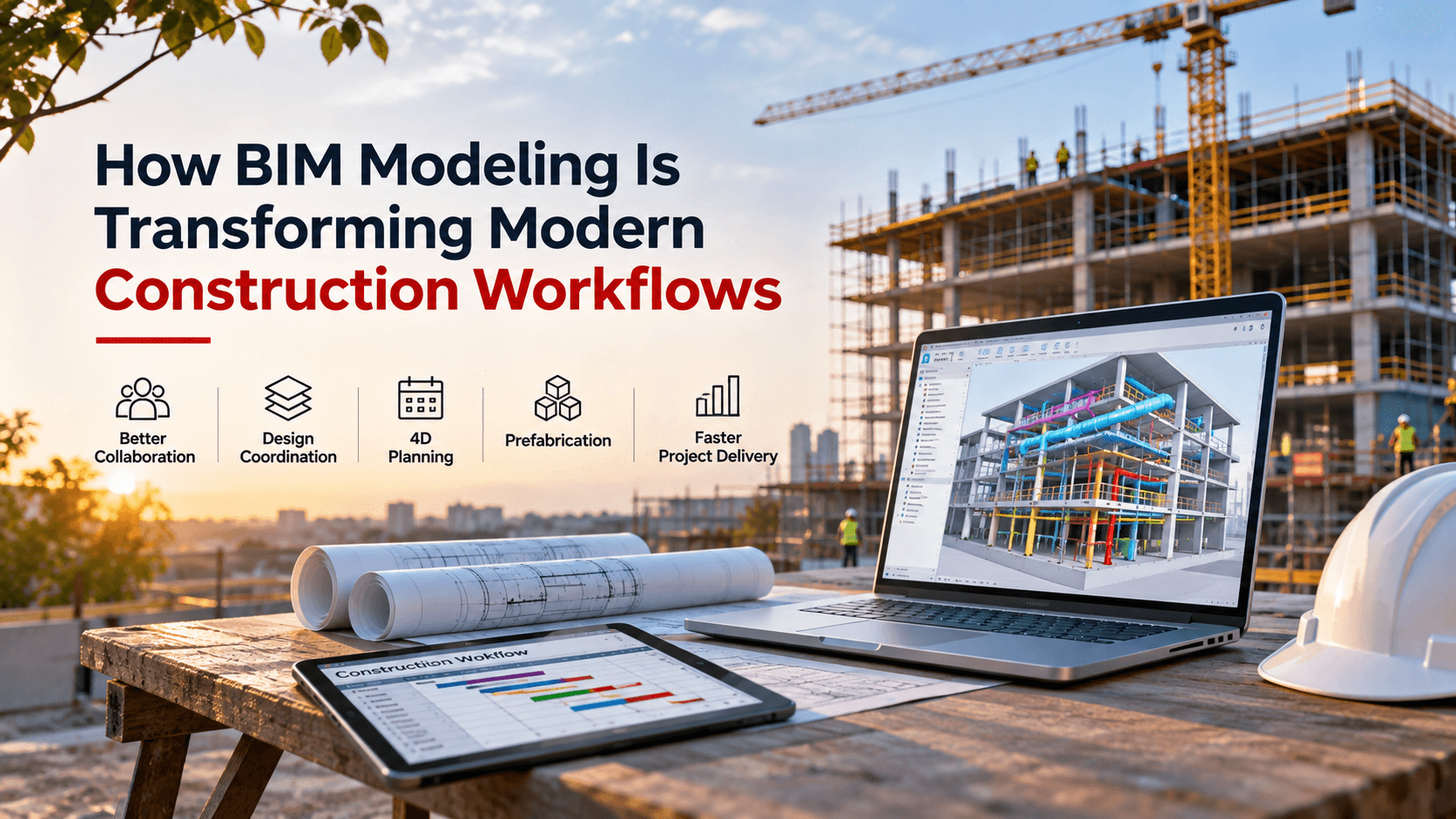
How BIM Modeling Is Transforming Modern Construction Workflows
Construction has become increasingly data-driven. Projects that once relied on separate drawings, manual coordination, and paper-based documentation now require continuous collaboration across architects, engineers, contractors, fabricators, and owners. As buildings grow more complex and schedules become tighter, traditional workflows often struggle to keep pace with modern project demands.
Building Information Modeling (BIM) has changed how construction teams plan, design, coordinate, and deliver projects. Rather than treating drawings as isolated documents, BIM creates intelligent digital models that combine geometry, technical data, and project information into a single coordinated environment.
The result is a more connected construction workflow where decisions are based on accurate information, design conflicts are identified earlier, and project teams collaborate more effectively throughout the project lifecycle.
This article examines how BIM modeling is transforming modern construction workflows and why it has become a key part of project delivery across the architecture, engineering, and construction (AEC) industry.
1. The Shift from Traditional Construction Methods
For many years, construction projects relied on two-dimensional drawings prepared independently by different disciplines.
Architectural, structural, and MEP teams often worked separately, with coordination taking place through drawing reviews and manual revisions.
While this approach remains familiar, it presents several challenges:
Duplicate project information
Manual drawing updates
Coordination gaps
Limited project visualization
Increased risk of documentation errors
Slower communication between teams
As project complexity has increased, these limitations have become more difficult to manage.
BIM introduces a digital workflow where project information is connected rather than isolated.
2. Creating a Centralized Source of Project Information
One of BIM's greatest strengths is its ability to create a single source of truth for project data.
Instead of maintaining multiple disconnected documents, project teams work from coordinated digital models containing architectural, structural, and building systems information.
This centralized approach helps ensure that:
Design changes are reflected consistently
Documentation remains synchronized
Teams access current project information
Communication improves across disciplines
Reliable information supports better decision-making throughout every stage of construction.
3. Improving Collaboration Across Project Teams
Construction projects involve numerous stakeholders, including:
Architects
Structural engineers
Civil engineers
Mechanical engineers
Electrical engineers
Plumbing designers
Contractors
Fabricators
Project managers
Facility owners
Each discipline contributes specialized expertise, but successful project delivery depends on effective collaboration.
BIM allows multiple teams to work within a coordinated modeling environment where information is shared rather than duplicated.
This reduces communication gaps and supports faster resolution of design issues.
4. Detecting Problems Before They Reach the Job Site
Many construction issues originate during design but are only discovered after installation begins.
Examples include:
Structural and mechanical conflicts
Electrical routing problems
Equipment clearance issues
Ceiling space congestion
Maintenance access restrictions
BIM enables project teams to identify these problems digitally before construction starts.
Early coordination minimizes field modifications, helping projects avoid unnecessary delays and additional costs.
5. Streamlining Design Revisions
Design changes occur throughout every construction project.
Client requests, regulatory requirements, value engineering, and site conditions all contribute to revisions.
Traditional drafting often requires multiple drawings to be updated manually.
BIM simplifies this process because model changes automatically update related documentation, including:
Floor plans
Elevations
Sections
Schedules
Quantity takeoffs
Detail views
This automation improves documentation accuracy while reducing repetitive drafting work.
6. Enhancing Construction Planning
Successful construction depends on more than accurate design.
Project teams must also coordinate:
Construction sequencing
Material deliveries
Equipment placement
Workforce scheduling
Site logistics
Temporary works
BIM supports these activities by providing visual project models that improve planning before construction begins.
When combined with scheduling tools through 4D BIM workflows, teams can simulate construction sequences and identify potential scheduling conflicts before work starts.
This results in better coordination and more efficient site operations.
7. Supporting Accurate Quantity Takeoffs
Material estimation affects every stage of project delivery.
Inaccurate quantities can result in procurement delays, budget overruns, or unnecessary waste.
BIM models generate quantities directly from project components.
Teams can accurately estimate:
Concrete
Structural steel
Reinforcement
Mechanical equipment
Electrical fixtures
Piping
Architectural finishes
Since quantity schedules update automatically when the model changes, procurement decisions remain aligned with current project information.
8. Improving Coordination for MEP Systems
Mechanical, electrical, plumbing, and fire protection systems compete for limited building space.
Poor coordination frequently leads to installation conflicts that disrupt construction.
BIM allows engineers to coordinate:
HVAC ductwork
Plumbing systems
Electrical conduits
Cable trays
Fire protection piping
Mechanical equipment
Accurate MEP coordination improves constructability while reducing field rework.
9. Supporting Prefabrication and Modular Construction
Off-site manufacturing continues to reshape construction workflows.
Prefabricated components require highly accurate digital models to ensure they fit correctly during installation.
BIM supports fabrication by providing reliable geometric information for:
Structural steel assemblies
Pipe spools
Duct systems
Equipment supports
Modular building sections
Improved accuracy reduces fabrication errors and shortens installation time on-site.
10. Improving Cost Control Throughout the Project
Construction budgets are influenced by many variables, including material costs, labor productivity, and schedule performance.
BIM contributes to better cost management by improving:
Quantity accuracy
Design coordination
Procurement planning
Change management
Construction sequencing
Fewer errors and better planning help reduce avoidable costs throughout project delivery.
11. Strengthening Quality Assurance
Quality control extends beyond construction inspections.
Reliable BIM workflows include structured model reviews that verify:
Modeling accuracy
Documentation consistency
Coordination quality
Compliance with project standards
System completeness
Routine quality checks improve confidence in project information before construction begins.
12. Supporting Digital Collaboration Across Multiple Locations
Large projects often involve teams working from different offices, cities, or countries.
Cloud-based BIM collaboration enables project participants to:
Share updated models
Review design changes
Coordinate disciplines
Track revisions
Resolve issues more efficiently
Digital collaboration reduces delays caused by document transfers and outdated project files.
13. Extending Value Beyond Construction
BIM continues to provide value after project completion.
As-built models contain detailed information about building systems, including:
Equipment specifications
Asset locations
Manufacturer data
Maintenance requirements
Installation records
Facility managers use this information to support maintenance, renovations, and long-term asset management.
The model becomes a valuable operational resource rather than simply a design deliverable.
14. Enabling Smarter Decision-Making
Construction projects generate large amounts of information.
BIM organizes this information into an accessible digital environment that supports informed decision-making throughout the project lifecycle.
Project teams can evaluate:
Design alternatives
Construction methods
Space utilization
Equipment layouts
Maintenance access
Future expansion opportunities
Better information allows organizations to make decisions earlier, when changes are typically less expensive to implement.
15. Why Construction Firms Are Investing in BIM
Construction companies increasingly view BIM as a core business capability rather than an optional design tool.
The reasons are practical.
BIM helps firms:
Improve coordination
Reduce project risks
Minimize construction errors
Increase productivity
Deliver projects more efficiently
Support digital construction initiatives
Meet growing client expectations
As digital delivery becomes more common across the industry, BIM is increasingly integrated into standard project workflows.
16. Best Practices for Successful BIM Workflows
Organizations can maximize the benefits of BIM by following several established practices.
16.1 Start BIM Early
Implement BIM during project planning and design rather than introducing it later in the construction process.
16.2 Define Clear Standards
Establish modeling guidelines, naming conventions, and Level of Development (LOD) requirements before production begins.
16.3 Encourage Continuous Coordination
Regular multidisciplinary reviews help identify issues before they affect construction activities.
16.4 Maintain Model Quality
Routine quality assurance checks ensure that models remain accurate and reliable throughout the project.
16.5 Partner with Experienced BIM Professionals
Successful BIM implementation depends on skilled modelers, coordinators, and engineers who understand both software workflows and construction practices.
17. Conclusion
Construction workflows continue to evolve as projects become larger, more collaborative, and increasingly dependent on accurate digital information. Traditional methods based on disconnected drawings are giving way to integrated workflows that improve communication, coordination, and decision-making across every stage of project delivery.
BIM modeling plays a central role in this transformation by creating intelligent digital models that connect design, planning, construction, and facility management. From reducing coordination errors and supporting prefabrication to improving documentation and lifecycle asset management, BIM helps project teams deliver more predictable and efficient outcomes.
For organizations seeking to improve productivity, reduce project risks, and adapt to the demands of modern construction, BIM has become an essential foundation for smarter project execution.